Good morning, teachers, students, and parents!
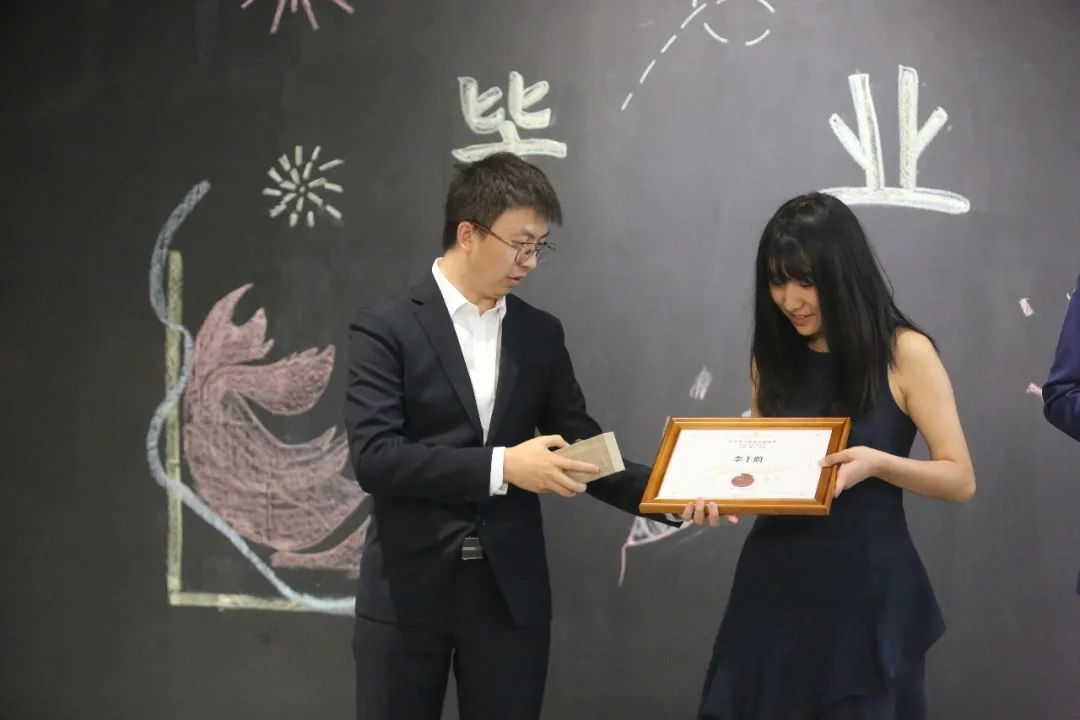
First of all, I would like to thank Ms. Chi Xiao for inviting me to participate in Curionesty College’s 2021 Bar Mitzvah Ceremony and to give a speech. Then, I would like to express my best wishes to the main protagonists of today’s Bar Mitzvah: students Wu Yishen, Wu Han, and Zhang Kexin.

With regard to the Bar Mitzvah, people always think and discuss what it really means to a person or what it really means in life.
In many countries, the age of 18 is taken as the age mark of adulthood, and since then one can enjoy the political rights that adult citizens have, such as the right to vote and the right to be elected. In democratic elections in democratic countries, 18-year-old citizens who get the right to vote for the first time are called “first voters”.
In this sense, adulthood means the autonomy and independence of a person, who is free from the guardianship of his elders to choose and control his own social behavior and way of life. A similar behavior can be seen in many animals, where young individuals are pushed out of their original family circle once they reach adulthood, leaving them to fend for themselves.
Of course, Curionesty College has no problem choosing 17 as the age point for adulthood. For in reality, human adulthood is a process, not simply a point in time. The law’s provisions are simply there for convenience. Generally speaking, roughly from the age of 16 to 18 is the main time period when a minor gradually transitions to adulthood.
If we take whether a person has his or her own independent value judgment and ideology, and whether he or she is able to decide independently on his or her own course of action as a sign of adulthood, then the difference may be great for people in different social environments and for people with different personalities. This standard may be even higher if it is measured against the words “independent spirit, free mind”, which Mr. CHEN Yinke inscribed for Mr. WANG Guowei.
Perhaps, some people have become adults before the legal age, which may or may not be related to those sports stars, music stars, literary stars and so on who become famous at a young age; in addition, perhaps some people are not yet adults even after the legal age, or even throughout their lives. Therefore, being older does not mean that one can be qualified to give so-called guidance to young people, and this is also the reason why I am addressing this Council today, and at the same time, I am also apprehensive about it.
As I held the 17th Bar Mitzvah Ceremony for three of my classmates today, I also thought about when I was 17 or 18 years old. When I was seventeen or eighteen, I was in junior high school in Chongqing during the Cultural Revolution. Because of the Cultural Revolution, after graduating from elementary school in 1966, I was suspended for about three years, and it was only in 1969 that all schools resumed teaching, so I entered junior high school at the age of 14 or 15. When I graduated from junior high school at the age of eighteen, I went to the countryside as a Young Knowledge Worker and settled down in the rural area of Tongjiang County in the Daba Mountains in northern Sichuan. Being settled in the countryside alone, I was basically independent in my life. Although unlike local farmers, the intellectual youths were given a monthly food ration of 30 pounds to buy, but that was not enough, they had to participate in labor to earn work credits, and in addition, they had to grow their own vegetables, cut their own firewood in the mountains, and burn their own firewood for cooking.
But it was not considered independent in thought, because the education we received from childhood was monolithic ideology. We also learned English in junior high school, but the only phrase we remember now is “Long live Chairman Mao! In school, every morning study hall was filled with Mao’s writings, and we read Mao’s “Old Three Stories” over and over again: “Serving the People,” “The Fool’s Duke Moves the Mountain,” and “In Memory of Baekchun. Not only the political class, but also the language class was basically filled with political and ideological education, the main theme of which was to bear in mind the hatred of the class and the nation, and to be loyal to the leader and to the party, and so on.
At that time, the only bookstore was the Xinhua Bookstore, and the number of books available in the bookstore, as well as the number of books that could be read, were very, very limited. Apart from the writings of the leaders, there were only a few types of other books that were used in conjunction with the political propaganda. The single source of information and propaganda indoctrination created a solidified way of thinking and conceptual model for several generations, including me.
After the Cultural Revolution, the reform and opening-up period of the 1980s can be considered the most important period of ideological liberation and renaissance in China’s modern history, during which I had the opportunity to come into contact with all kinds of information from the outside world, and was able to have a preliminary cognition of human thought and cultural deposits. During that period, when I was in my thirties, I had just stepped into adulthood in terms of thoughts and ideas.
So, today, forty years after the reform and opening up, in the age of information and network, when people can receive a wider variety of information, and when there is an educational system that seems to be more systematic and complete, is it true that the kind of confusion and perplexity that characterized people’s thinking several decades ago has been completely eliminated? Of course not. That’s why there are explorations of education and human development like Curionesty College.
China’s ideological liberation and renaissance in the 1980s didn’t really last, and the confinement of thought, culture, and education wasn’t completely broken. But in an age of information explosion and networks, it is no longer possible to return to the completely closed situation of the past. That’s why the Curionesty College undertakes courageous and unique explorations, and that’s why students have the opportunity and good fortune to discover themselves and realize themselves in the Curionesty College.
One of the dimensions of independence and autonomy that is a hallmark of human adulthood is the self-discovery and full development of the human being as a special personality. Just as there is no grain of sand in the world that is exactly the same, there is no person in the world that is exactly the same; each person’s nature, purpose, preferences, and talents are all different, but all are valuable. If one can keep overcoming obstacles and difficulties, and keep discovering oneself, exploring oneself, and realizing oneself in freedom and happiness, then one is a true adult and a success.

I learned through Ms. Chi Xiao that the three students receiving their Bar Mitzvahs today all have their own favorite things to do.
Wu Yishen is good at all kinds of sports, especially mountain biking, which is his strong point. I loved playing soccer when I was in elementary school, and from elementary school, middle school to university, I was the main player of the class team or the school team, but I didn’t have the chance to realize a bigger dream of playing soccer. I envy Wu Yishen’s current sports environment and conditions, and wish him the best in his sports endeavors;
Wu Han is a master of cartooning. I also loved drawing when I was a child, and was called one of the two best drawers by my art teacher at the school with thousands of students where I attended junior high school. Entering an art academy to specialize in art was also one of my unfulfilled aspirations, but the skill of drawing helped me a lot in geological sketching at work. I also envy Wu Han for being able to freely utilize his drawing talents and wish him a more brilliant career;
Zhang Kexin has a talent for music and art. She not only plays the guitar, but also composes her own lyrics and music, and even writes and performs plays. Unfortunately, I have not been able to learn a single musical instrument so far, and I don’t know if I will have the chance to do so in the future, so I also envy Ms. Zhang Ke Xin very much. Of course, I also wish Zhang Kexin will fully develop her talent and give herself and everyone else a bigger surprise in the future.
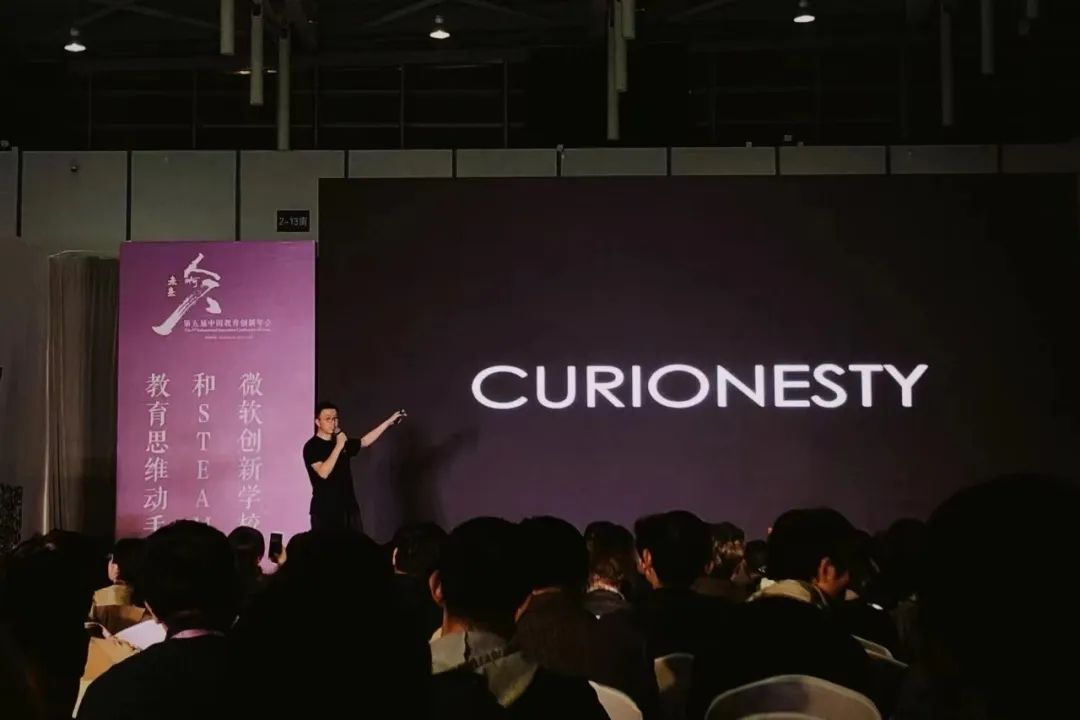
Another thing that comes to my mind is that adulthood is not about saying goodbye to the underage past, and adulthood is not about becoming “old-fashioned”. The most valuable trait of a human being is the childlike heart that is full of curiosity and exploration of things in the world. The most valuable trait of a human being is a childlike spirit of curiosity and exploration of the world, and even more valuable is to be able to maintain this curiosity and exploration throughout one’s life, which is probably why the Curionesty College was named “Curionesty” in the first place.
In closing, I would like to thank the teachers, students, and parents for attending this Bar Mitzvah ceremony, and once again, I would like to extend my blessings to the three students receiving their Bar Mitzvahs.
Thank you all!
November 11, 2021

Writing: Fan Xiao
Photo: Bottle & Doodle
Editing & Layout: Gege